Affirmation journal prompts have become a cornerstone of modern mindfulness and personal development practices.
By merging positive affirmations with guided self-inquiry, this type of journaling helps to shift negative thought patterns, deepen emotional insight, and foster a stronger connection to one’s true self.
In this blog, you’ll learn what affirmation journal prompts are, why they matter, and how to begin a consistent practice that promotes mental clarity and spiritual alignment.
We’ll also explore ways to use these prompts for boosting confidence, reducing stress, and nurturing soul-level wisdom.
And for anyone looking for a transformative journaling experience, the Foundations of Self-Discovery Mastery Journal offers a beautifully structured system to harness these benefits and track emotional growth with intention.
Ready to deepen your self-awareness through words? Let’s begin.
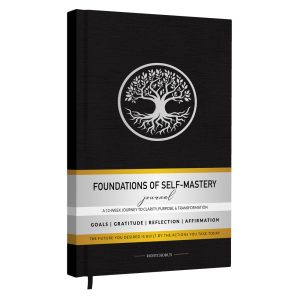
Foundations of Self Discovery & Mastery Journal: A 13-Week Personal Development Journal System
$29.95
The Foundations of Self Discovery…
Table of Contents
What Are Affirmation Journal Prompts and Why Do They Matter?
Affirmation journal prompts are reflective writings anchored by positive, declarative statements. These prompts work powerfully because they engage both mindset shaping and emotional rewiring.
Through consistent journaling, we invite affirmations into our conscious awareness—replacing doubt, fear, or insecurity with grounded self-trust and purpose.
Neuroscience confirms that repetition of positive thoughts can encourage neuroplasticity, supporting long-term mindset transformation.
When paired with thoughtful prompts, affirmations don’t just uplift—they reveal, inspire, and reframe.
Bullet points to remember:
- Positive affirmations help train your brain to spot growth opportunities.
- Reflective journaling enhances emotional intelligence and pattern recognition.
- Combined, they encourage a shift from reactive to intentional living.
- Writing affirmations also activates multiple learning channels: cognitive, visual, and tactile.
The Power of Words in Shaping Mindset
Words are more than tools for communication—they’re instruments of creation and identity.
When affirmation journal prompts are used intentionally, they help dissolve limiting beliefs.
Science acknowledges that “self-affirmation theory” can buffer against the effects of stress and increase receptiveness to personal growth. This is especially important if you’re navigating transitional seasons or recovering from burnout.
By choosing empowering language, you reclaim authorship of your inner narrative.
Journaling about affirmations like “I am worthy of rest” or “My voice matters” deepens the impact because it requires you to reflect on why that belief is meaningful.
Through repetition, it moves from aspirational to integrated. The more often you reinforce these truths, the more your inner dialogue shifts into one of compassion, confidence, and clarity.
How Affirmation Journal Prompts Enhance Emotional Awareness
Affirmation journal prompts invite you into emotional honesty in a safe, nonjudgmental space. This creates opportunities to recognize, name, and process emotions that may otherwise be ignored.
Whether you’re feeling overwhelmed or empowered, journaling gives language to your experience.
An example: when writing about the prompt “Today I honor my progress,” you’re also acknowledging past struggles and celebrating resilience.
This conscious saying and writing of affirmations help you extend compassion to yourself. It rewires your mental lens to see value in effort—not just outcomes.
Using this method consistently can:
- Help reframe shame or guilt into learning and growth.
- Create emotional grounding when feeling scattered or anxious.
- Encourage deeper empathy for both self and others.
- Foster resilience by centering on inner truths amid chaos.
Foundations of Self Discovery & Mastery Journal: A 13-Week Personal Development Journal System
$29.95
The Foundations of Self Discovery…
How to Start a Daily Practice Using Affirmation Journal Prompts

A successful journaling practice is less about perfection and more about consistency. To reap the full emotional and cognitive benefits of affirmation journal prompts, it helps to create a calming ritual—a predictable rhythm your nervous system can rely on.
Starting or ending your day with this habit offers a moment of intentional stillness.
The Foundations of Self-Discovery Mastery Journal is especially helpful here. With its 13-week format, each page offers curated prompts combining affirmations, reflection questions, and a model response to guide your emotional clarity.
Tips to build your ritual:
- Choose a quiet, welcoming space without digital distractions.
- Brew a cup of tea, light a candle, or play soft music to ground yourself.
- Commit to a consistent time of day that fits your rhythm.
- Use tools (like the Foundations Journal) that provide inspirational cues and structure.
Creating a Calming Ritual for Journaling
The environment in which you journal shapes your emotional receptivity. A peaceful space signals to your brain that it’s safe to slow down and feel.
Ritual doesn’t mean elaborate—something as simple as using the same pen or lighting a favorite candle can activate your subconscious to associate journaling with healing.
Morning rituals help align your energy with your goals, while evening rituals support emotional digestion and rest.
With consistency, this journaling habit becomes not just a practice—but a sacred pause that nourishes your soul.
Aligning Prompts with Your Current Emotional or Life Needs
Your emotional landscape shifts day by day, which is why personalization is key. You might focus on self-esteem one week and clarity or forgiveness the next.
Rotating themes can keep your affirmation prompts aligned with your growth edges.
Within the Foundations of Self-Discovery Mastery Journal, prompts are thoughtfully structured to address a range of topics—from grounding yourself in gratitude to stepping into courage.
This framework supports emotional versatility while keeping your intention anchored.
Some weekly theme ideas:
- Week 1: Releasing self-doubt
- Week 2: Embracing joy and presence
- Week 3: Navigating uncertainty
- Week 4: Setting healthy boundaries
Foundations of Self Discovery & Mastery Journal: A 13-Week Personal Development Journal System
$29.95
The Foundations of Self Discovery…
Daily Intention and Gratitude: Integrating Affirmation Journal Prompts
One of the most effective ways to use affirmation journal prompts is by bookending your day with intention and gratitude. This dual practice sets the tone for conscious action and ends with emotional reflection. It’s simple, empowering, and deeply grounding.
As part of its design, the Foundations of Self-Discovery Mastery Journal includes both morning and evening spreads.
Each begins with a positive quote, dedicated prompt, and daily affirmation, followed by space for gratitude and planning for tomorrow’s mindset. The structure guides consistent emotional check-ins while gently reinforcing your affirmations.
Daily integration tips:
- Morning: Set an intention using an affirmation like “I am grounded in purpose.” Reflect for five minutes.
- Evening: Name three things you’re grateful for and a lesson you learned that day.
- Use prompts such as “Today, I affirm that I am…” and “I choose to…”
- Close the journal session by repeating your affirmation aloud.
Starting with Intention, Ending with Reflection
How you begin your day impacts your outlook, and how you end it affects your rest.
Start each morning grounded in a positive self-statement—an affirmation that transcends your to-do list and speaks to your being. Use prompts like “Today, I choose peace despite uncertainty.”
In the evening, shift focus to gratitude.
Ask yourself, “What went well today?” and “What inner strength did I rely on?” Refer to the daily gratitude section in your Foundations journal to track this journey.
That simple practice helps close mental loops and bring emotional completion to the day.
Using Affirmations to Align Mindset and Energy
Your energy follows your focus. Affirmations written at the start of the day—especially when paired with prompts like “I release…” or “I call in…”—help recalibrate your nervous system.
You set the emotional tone rather than react to it.
Reflective writing transforms static thoughts into empowered action. When you declare through the pen, “I step into today with courage,” it becomes more than words—it’s an energetic blueprint.
Referencing these affirmations during stressful moments becomes a powerful centering technique.
Foundations of Self Discovery & Mastery Journal: A 13-Week Personal Development Journal System
$29.95
The Foundations of Self Discovery…
Boosting Self-Confidence Through Affirmation Journal Prompts

Affirmation journal prompts play a powerful role in developing self-confidence.
By affirming your values, capabilities, and progress in writing, you’re reinforcing a positive identity narrative—one grounded not in perfection, but in authenticity and resilience. This repeated self-validation builds self-trust.
With the Foundations of Self-Discovery Mastery Journal, journaling becomes an act of empowerment.
It offers prompts to help you recognize your efforts, celebrate small wins, and reframe fears into action steps. Through this process, you begin to see yourself not as someone trying to become—but as someone steadily unfolding.
Prompt styles that foster confidence:
- “I am proud of myself for…”
- “A challenge I overcame today was…”
- “I trust myself to handle…”
- “I radiate confidence because I…”
Journaling Prompts That Nurture Self-Trust
The act of declaring pride in yourself may feel unfamiliar, especially if you’re used to self-criticism.
But trust grows through evidence and repetition. Affirmation prompts that celebrate what you did right—even imperfectly—are vital.
When journaling “I am proud of myself for making time to rest today,” you acknowledge that alignment matters more than hustle.
This cultivates a deeper sense of self-trust that’s inwardly sourced and resilient against external validation.
Affirmations to Validate Your Inner Strength
Affirmations like “I carry wisdom shaped by my experiences” or “I am stronger than my fears” help you see your life story not as a struggle—but as a strength.
Reflecting on such declarations builds emotional resilience rooted in acceptance and growth.
These prompts help validate the truths you carry but may have forgotten. Writing them out daily slowly reshapes your beliefs into ones that uplift and fortify.
Foundations of Self Discovery & Mastery Journal: A 13-Week Personal Development Journal System
$29.95
The Foundations of Self Discovery…
Tapping Into Inner Wisdom: Spiritual Connection via Affirmation Journal Prompts
Beyond emotional healing, affirmation journal prompts can open gateways to spiritual alignment and soulful guidance.
Whether you consider yourself spiritual, intuitive, or introspective, journaling becomes a way to not only express—but to receive insight.
Utilizing sacred reflection prompts like “What is my soul trying to tell me today?” is a practice in listening. The Foundations of Self-Discovery Mastery Journal includes model entries that encourage this spiritual listening while rooting you in grounded affirmations.
Use these practices to access your inner guidance system:
- Morning: Set a soulful intention or prayer.
- Midday: Re-read your journal as a reminder of alignment.
- Evening: Reflect with prompts that invoke inner stillness.
- Weekly: Write a letter from your higher self or inner guide.
Faith-Based or Soul-Centered Journaling Practices
Spiritual journaling is about presence and permission rather than pressure. You don’t need complex theology—just curiosity and openness.
Use prompts like “What truth am I resisting?” or “How can I be a vessel for peace today?”
This reflective process connects you to something greater than your daily stressors.
Whether you identify that source as your higher self, Divine energy, or simply intuition, the process can feel grounding and transcendent.
Asking Soulful Questions to Receive Deeper Answers
Affirmation journal prompts can also take the shape of spiritual inquiry.
Questions like “What is love inviting me to do today?” or “Where am I being asked to grow?” pierce beneath surface worries.
Answers often come not as words—but as feelings, ideas, or clarity.
Use these prompts when seeking direction or reconnection. They allow your journaling to become a dialogue with the deepest parts of yourself.
Foundations of Self Discovery & Mastery Journal: A 13-Week Personal Development Journal System
$29.95
The Foundations of Self Discovery…
Creating Long-Term Motivation with Affirmation Journal Prompts

One overlooked benefit of using affirmation journal prompts is their ability to generate long-term motivation.
Motivation rooted in self-kindness lasts longer than motivation rooted in shame. Affirmations help you attach your goals to your values and identity—not to arbitrary expectations.
Incorporating the Foundations of Self-Discovery Mastery Journal into your routine helps make motivation habitual.
With daily prompts like “Tomorrow’s Next Step” and clear progress-tracking tools, the journal doesn’t just inspire you—it keeps you accountable without burnout.
Use this strategy to stay motivated:
- Connect each affirmation to a meaningful purpose.
- Track and celebrate daily wins, no matter how small.
- Use motivational prompts like “I am moving one day closer toward…”
- Revisit tough days with grace: “Even on hard days, I show up for myself.”
Building Self-Discipline Through Reflection
Motivation is fleeting—but self-discipline builds permanence. Affirmation journal prompts focused on disciplined compassion help you stay the course with less inner conflict.
Writing about why your goals matter realigns temporary setbacks with long-term identity.
Prompt examples include:
- “Today I choose progress over perfection.”
- “I am becoming through daily integrity.”
These declarations restore trust in the process and yourself.
Celebrating Milestones Mindfully
Recognition deepens motivation. Don’t wait for major accomplishments. Celebrate follow-through, courage, or authenticity. Use prompts like:
- “One thing I’m proud I did for myself this week is…”
- “This month, I grew because I…”
The Foundations journal includes dedicated completion rituals like a “Letter to Future Self” page—helping you close one chapter and begin the next with purpose.
Conclusion
Affirmation journal prompts are a powerful, accessible practice for healing, mental clarity, and soulful growth.
By setting intentional time each day to reflect, affirm, and listen inward, you begin to create a mindset of resilience and self-trust. This journey doesn’t require perfection—just presence and consistency.
The Foundations of Self-Discovery Mastery Journal offers a supportive framework for anyone wanting to go deeper.
With its blend of prompts, affirmations, guided templates, and emotional tracking, it transforms journaling from a task into a sacred experience.
Whether you’re just starting or you’re looking to deepen your existing practice, this journal is your ally in becoming more deeply you. Let your pen be your guide.
Frequently Asked Questions
Affirmation journal prompts are writing prompts that incorporate or are built around positive affirmations. They help you reflect on your thoughts, emotions, and beliefs while reinforcing a constructive, empowering mindset through daily writing.
Start by finding a quiet space and journaling for 5–10 minutes daily. Read the prompt, write openly, and repeat the affirmation out loud or in your thoughts. Over time, the repetition helps solidify new thought patterns.
Morning journaling aligns your energy for the day, while nighttime journaling offers reflection and integration. Choose the time that suits your lifestyle, or try both.
Yes. Writing affirmations supports emotional regulation and helps reframe negative self-talk. Over time, it builds confidence and resilience, offering clarity when anxiety or self-doubt strike.
Any notebook works, but a structured option like the Foundations of Self-Discovery Mastery Journal offers daily prompts, confidence-building exercises, and emotional tracking—all designed to guide deep inner work.
Writing engages more brain regions than speaking alone, deepening processing and emotional imprinting. When you journal affirmations, they become more internalized and actionable.
Absolutely. Revisiting the same prompt with fresh awareness allows for deeper insights. What you discover on Day 1 may evolve profoundly by Day 7.
Start with 5 to 20 minutes daily. The key is consistency rather than duration. Even short entries bring clarity and momentum when practiced regularly.
Try: “I am worthy exactly as I am.” It’s a simple yet profound entry point. Pair it with the prompt: “What does self-worth look like for me today?”
Yes. Affirmation journal prompts are especially powerful when emotions feel heavy. They help acknowledge what’s true while guiding your focus toward healing and clarity.