Daily journaling has become more than a wellness trend—it’s a cornerstone practice for inner clarity, mental wellness, and enduring personal development.
At the heart of this journey lies the importance of choosing good journals. Not just any notebook will do.
A good journal is intentional, offering design features that nurture self-discovery, reduce emotional clutter, and support sustainable habits.
For those seeking journaling tools backed by science and structured for impact, the Foundations of Self-Discovery Mastery Journal stands out.
With guided prompts, reflection systems, and daily rituals built into its design, it transforms pages into a path of emotional strength and mindful growth.
In this blog post, we’ll guide you through choosing the right journal for your unique journey, uncover the science behind good journaling practices, and help you find a tool that meets your evolving needs at every life stage.
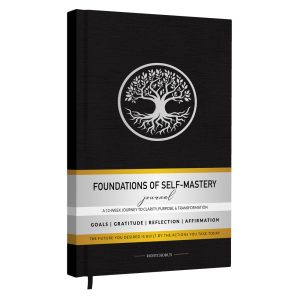
Foundations of Self Discovery & Mastery Journal: A 13-Week Personal Development Journal System
$29.95
The Foundations of Self Discovery…
Table of Contents
What Makes Good Journals Essential for Personal Growth?
Choosing good journals is more than a matter of personal preference—it’s an opportunity to create a psychologically safe space where self-discovery thrives.
A journal invites you inward, helping you tune into what matters most, especially when life feels noisy or uncertain.
These benefits are amplified when journals are thoughtfully designed to meet emotional, cognitive, and spiritual needs.
Whether you’re navigating stress, celebrating wins, or clarifying goals, a well-crafted journal becomes a trusted partner in your growth journey.
Emotional Awareness Begins on the Page
Good journals often act as mirrors. They reveal emotional truths we haven’t yet spoken and help us express feelings in a safe, structured way.
Journaling for healing is a proven method in cognitive behavioral therapy (CBT) and mindfulness coaching programs.
When we write, we process our emotions with greater clarity. That’s why wellness researchers consistently find that consistent journaling:
- Reduces anxiety and intrusive thoughts
- Helps name and regulate difficult emotions
- Strengthens the connection between thoughts, behavior, and feelings
- Encourages forgiveness and self-compassion
When considering good journals, look for those that support rich emotional processing.
For example, the Foundations of Self-Discovery Mastery Journal includes daily sections like “What Went Well” and “What to Improve” to help articulate challenges while cultivating solution-minded thinking.
Intentional Design Inspires Daily Use
It’s important to distinguish between a generic notebook and a truly good journal. Design elements encourage consistency and make the practice mentally effortless—even on busy or emotionally demanding days.
Consider the following features that contribute to sustainable journaling habits:
- Guided prompts that reduce overwhelm and spark insight
- Durable pages that hold up over daily use
- Elegant layout that invites clarity and focus
- Built-in rituals like goal-setting, affirmations, and reflection
The Foundations of Self-Discovery Mastery Journal shines here as well.
With its six-part daily format and 13-week structure, the journal combines long-term vision with immediate emotional connection. This isn’t just pretty paper—it’s purpose on every page.
Foundations of Self Discovery & Mastery Journal: A 13-Week Personal Development Journal System
$29.95
The Foundations of Self Discovery…
Structured vs. Freestyle: Choosing Good Journals Based on Writing Style

Your journaling style speaks volumes about how your mind works. Are you drawn to reflection questions, or do you prefer free expression as your thoughts spill onto the page?
When selecting good journals, identifying your writing preferences will help you find the best possible fit. Some people thrive with structure; others feel boxed in.
But everyone benefits from clarity and motivation—two things good journals can provide in different ways.
When Structure Serves Discovery
If your goal is to create new thought patterns or emotional breakthroughs, structured journals are uniquely powerful. The built-in prompts guide your focus without the burden of deciding what to write about.
The Foundations of Self-Discovery Mastery Journal exemplifies structured journaling at its best. Rooted in psychology and behavior science, this journal uses a six-part daily spread that includes:
- Today’s Goal — Reinforces purposeful living
- Gratitude — Builds baseline happiness
- Affirmation — Trains a growth mindset
- What Went Well/What to Improve — Reflective accountability
- Next Step — Promotes momentum and closure
Structured journals like these create a framework that gradually teaches you how to listen inward and live outward with alignment.
The Benefits of Freestyle Journaling
On the flip side, freestyle journaling helps creative thinkers and emotional processors explore ideas organically. There’s room to write freely, doodle, or brainstorm without judgment.
The unfiltered nature of freestyle writing can lead to spontaneous insights and emotional releases that are healing in their own right.
For those who want flexibility with subtle guidance, hybrid journals work beautifully. These “lightly prompted” journals provide entry points but don’t overpower your own voice.
What makes good journals in this category?
- Open-ended prompts or blank pages
- Inspirational quotes that spark thought
- Encouraging affirmations without pressure
- Plenty of space for notebooks to evolve with you
The Foundations of Self-Discovery Mastery Journal includes cross-referenced notes pages alongside structured content—merging both methods into one seamless experience.
Foundations of Self Discovery & Mastery Journal: A 13-Week Personal Development Journal System
$29.95
The Foundations of Self Discovery…
How Good Journals Support Mindfulness & Reflection
Good journals are more than record-keepers—they are mindfulness tools. By engaging your senses and slowing you down, daily journaling cultivates present-moment awareness.
Over time, it trains your brain to respond rather than react—to observe your life without judgment.
Journaling stretches across every part of mindfulness: breath, observation, grounding, and compassionate presence.
Journaling as a Daily Mindfulness Ritual
When you begin your day with journaling or return to the page before sleep, you’re creating intentional bookends. These moments become grounding rituals that:
- Sharpen your attention
- Alleviate racing thoughts
- Anchor you in the here and now
- Make you conscious of your emotional landscape
You might pair your journal time with breathwork, gentle stretching, or herbal tea. Ritualizing your writing practice conditions your body and mind for peace.
The Foundations of Self-Discovery Mastery Journal reinforces this by structuring both morning and evening spreads. It becomes a soothing habit—one that builds mental resilience over time.
Reflective Prompts for Exploring Thought Patterns
Good journals don’t just capture what happened—they help you understand why.
Introspective prompts allow you to zoom out and examine how your beliefs, fears, and self-talk shape your life. This kind of reflection reshapes neural pathways and fosters growth.
Journals rooted in emotional science often include prompts like:
- What belief am I questioning today?
- Where did I feel shame, and how did I respond?
- What truth have I avoided facing?
- What brings me peace, and why?
Designed with exactly this strategy in mind, the Foundations of Self-Discovery Mastery Journal incorporates reflection-based layouts that help users illuminate patterns and begin real mindset shifts.
Foundations of Self Discovery & Mastery Journal: A 13-Week Personal Development Journal System
$29.95
The Foundations of Self Discovery…
How to Pick Good Journals for Different Life Stages or Emotional Needs

Everyone journals for different reasons. Whether you’re just starting out or navigating deep emotional healing, the journal you choose should meet you exactly where you are.
This is where diversity in design really matters. Good journals adapt to your current emotional bandwidth and gently stretch it toward intentional living.
Beginners in Journaling
If you’re new to journaling, the blank page can feel intimidating. That’s why approachable structure, motivational language, and simplicity are everything.
Look for journals that:
- Provide short, daily prompts
- Include inspirational quotes
- Offer clear instructions or modeled responses
- Encourage progress over perfection
The Foundations of Self-Discovery Mastery Journal is especially supportive for beginners. It includes a “start here” foundation worksheet, daily encouragement, and affirmations that create emotional safety.
Journals for Deep Emotional Healing
For those healing from grief, trauma, or anxiety, your journal must be a gentle space of re-integration, not judgment.
Trauma-informed journals are designed to validate your emotional shifts while promoting consistent self-regulation.
Good healing journals will offer:
- Language that promotes self-compassion
- Grounding prompts and breath cues
- Spaces to document triggers and responses
- Celebratory pages for even small wins
The Foundations of Self-Discovery Mastery Journal addresses these needs with structured healing cycles, emotional progress reviews, and rituals like writing yourself a letter or mapping gratitude visually.
Foundations of Self Discovery & Mastery Journal: A 13-Week Personal Development Journal System
$29.95
The Foundations of Self Discovery…
The Science Behind Good Journals and Lasting Behavior Change
There’s a reason therapists, coaches, and neuroscientists all encourage journaling—it works. But why? The answer lies in how our brain responds to reflective writing.
Good journals are designed to help reinforce neural pathways that spark self-awareness, reframe negative thoughts, and establish consistent behaviors.
This section uncovers why purposeful journaling actually rewires your brain for resilience and growth.
Psychology-Backed Journaling Tools
Studies show that expressive writing reduces cortisol, increases immune function, and improves mood regulation.
When you write about goals, fears, or positive events, your brain behaves as if you’re experiencing them again, reinforcing emotional processing.
Behavioral science also affirms that journaling:
- Strengthens emotional vocabulary
- Enhances goal follow-through rates
- Disrupts limiting cognitive loops
- Promotes higher-order thinking and problem solving
When choosing good journals, opt for ones designed in consultation with therapists or coaches. These integrate the best of evidence-based interventions into an accessible, daily format.
Why the Foundations of Self-Discovery Mastery Journal Works
This is where the Foundations of Self-Discovery Mastery Journal shines brightest. Every section—from affirmations to progress reflections—is rooted in positive psychology and neuroplasticity research.
Signature features include:
- The “Quote-Question-Affirmation” system for structured neuro-rewiring
- Daily AM/PM check-ins for rhythm and reflection
- 13-week timeline to establish momentum and track growth ways
- Closure rituals like “Letter to Future Self” and “Gratitude Vision Board”
These features transform journaling from reactive coping to proactive growth. And when integrated daily, they build long-term changes across emotion, attitude, and behavior.
Foundations of Self Discovery & Mastery Journal: A 13-Week Personal Development Journal System
$29.95
The Foundations of Self Discovery…
Choosing Good Journals Based on Lifestyle and Season of Life

Good journals don’t just reflect who you are—they shift with who you’re becoming. Your journaling needs may change depending on your schedule, emotional load, or life transitions.
Many journalers ask, “What journal is best for me right now?” Let’s explore how lifestyle and life stage both influence what makes a journal the right fit.
Time-Conscious Professionals and Parents
If your day is packed with meetings, caregiving, or multitasking, you need a journal that respects your time but still yields powerful insights. Brief prompts with meaningful impact are ideal.
The Foundations of Self-Discovery Mastery Journal addresses this by offering a consistent yet minimalistic format that fits into:
- Morning coffee breaks
- Commute rituals
- Evening wind-down routines
- Sunday reset rituals
It keeps you grounded even in the busiest seasons.
Transitional Seasons: Going Through Change
Life transitions—new jobs, relationships, breakups, retirement—often trigger a season of deep emotion and uncertainty.
Good journals during these phases should gently usher in new perspectives.
Signs you’ve found the right journal:
- You feel emotionally validated while writing
- Prompts help you gain insight, not just vent
- There are encouragement sections for future pacing
- Celebration spaces amplify wins, even small ones
During these phases, structured encouragement becomes emotional scaffolding. Journals like the Foundations of Self-Discovery Mastery Journal are extremely effective for anchoring identity during change.
Conclusion
Ultimately, good journals are more than beautiful notebooks—they are catalysts for transformation, mindfulness, and self-leadership.
The right journal offers structure when you need clarity, offers freedom when creativity strikes, and always honors the sacred space between your thoughts and your breakthroughs.
Whether you’re just starting out or are deepening your journey, choosing a journal like the Foundations of Self-Discovery Mastery Journal can magnify your growth.
Its evidence-based prompts and emotionally-attuned design make daily writing not only easy but impactful.
If reflection, healing, or personal excellence matter to you—then journaling isn’t optional. It’s essential. Trust your words. Begin today.
Frequently Asked Questions
Look for journals with meaningful prompts, developmental guidance, and high-quality materials. Journals like the Foundations of Self-Discovery Mastery Journal offer affirmations, goal tracking, and self-reflection frameworks designed to maximize emotional growth.
Start small! Use a few minutes each morning or evening to write using a guided prompt. Structured journals like the Foundations of Self-Discovery Mastery Journal are perfect because they remove the guesswork and ease you into deeper reflection over time.
It depends on your needs. Structured journals are ideal for those who want emotional coherence, prompt-based insights, and behavior tracking. Blank notebooks are great for unfiltered creativity, but they lack the consistency that many people need to sustain a habit.
Yes. Journaling has been shown to improve emotion regulation, reduce anxiety, and offer safe emotional processing. The Foundations of Self-Discovery Mastery Journal is built with prompts and practices specifically intended to guide emotional healing.
The Foundations of Self-Discovery Mastery Journal is ideal for this journey. With its reflection-based system, accountability structure, and inspired quotes, it offers both comfort and challenge.
Aim for at least 5–10 minutes per day. Consistency matters more than volume. Daily journaling rewires your awareness, thoughts, and emotions through regular reflection habits.
Absolutely. Your journal is not a chore—it’s a support. Good journals are designed with grace. Pick up where you left off. The value lies in your return.
Mindfulness journaling asks you to observe and accept what is; goal journaling helps you define what’s next. The best good journals combine both, helping you remain present while moving forward.
Both work, but pen-to-paper journaling increases memory retention and emotional engagement. The tactile practice in journals like the Foundations of Self-Discovery Mastery Journal fosters intimacy and focus.
Not at all. Prompts serve as guidance, not limits. Feel free to explore beyond them. The best good journals empower you to take ownership of your journey in your own way.