Starting your day with a gratitude notebook can be a life-shifting practice rooted in both mindfulness and positive psychology.
A gratitude notebook isn’t just a diary—it’s a grounding tool that trains your brain to focus on abundance, intention, and joy.
In today’s busy world, it’s more important than ever to actively carve out space for emotional balance and presence.
This article will show you how to use a gratitude notebook to awaken self-awareness, reduce stress, and create a purpose-driven daily routine.
You’ll discover how to deeply integrate gratitude into your morning rituals, overcome emotional blocks, and enhance your path to personal growth.
Plus, we’ll introduce you to tools like the Foundations of Self-Discovery Mastery Journal—designed to help you create consistency, clarity, and a deeper sense of peace in your everyday life.
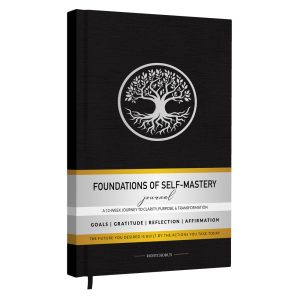
Foundations of Self Discovery & Mastery Journal: A 13-Week Personal Development Journal System
$29.95
The Foundations of Self Discovery…
Table of Contents
Why Use a Gratitude Notebook for Mental Clarity and Emotional Resilience
Incorporating a gratitude notebook into your daily life can significantly improve your mental clarity and emotional resilience.
Research in positive psychology highlights that gratitude journaling rewires the brain toward optimism and serves as a natural buffer against anxiety and depression.
Regularly writing down what you’re grateful for encourages emotional processing and helps navigate uncertainty with more stability.
A gratitude notebook can act as a steady companion during fluctuations in mental well-being. Studies show that individuals who keep gratitude records sleep better, experience fewer physical symptoms, and handle stress more effectively.
When used consistently, a gratitude notebook becomes more than a place for thankful thoughts—it becomes a daily ritual that offers structure, intention, and emotional safety.
Bullet-pointed benefits of using a gratitude notebook:
- Boosts serotonin and dopamine levels naturally
- Enhances overall mental health and emotional resilience
- Provides structure in moments of stress or uncertainty
- Strengthens relationships and empathy toward others
Understanding the Emotional Benefits of a Gratitude Notebook
Research consistently supports the emotional and psychological benefits of gratitude journaling.
The simple act of documenting what you’re thankful for, even on tough days, stimulates the limbic system—your brain’s emotional center.
This helps reduce cortisol levels (your stress hormone) and promotes the release of feel-good neurotransmitters like dopamine and serotonin.
Using a gratitude notebook daily also encourages perspective.
Instead of fixating on problem areas of your life, you begin to recognize the constants: supportive people, fulfilling activities, or simple moments of peace.
As a result, you become naturally more emotionally grounded and open to connection—even when life feels unpredictable.
Practicing regular gratitude journaling can improve emotional intelligence, emotional regulation, and increase overall life satisfaction.
With time, the notebook becomes a mirror of your strength and joy, even in adversity.
Daily Gratitude as a Tool for Emotional Processing
When emotions feel heavy or complicated, it might be difficult to know where to begin.
That’s where your gratitude notebook becomes crucial—not just as a wellness habit, but as a private reflective space where you can gently anchor your thoughts in realism and hope.
Research shows that gratitude allows for dual awareness of both challenge and appreciation, which helps individuals process emotions without becoming overwhelmed.
Try prompts such as:
- “What simple thing brought me calm today?”
- “What difficult experience taught me something useful?”
- “What am I proud to have handled, even imperfectly?”
These reflections transform your journal into a tool of emotional integration. They validate what’s difficult while highlighting the aspects of life still deserving appreciation.
Foundations of Self Discovery & Mastery Journal: A 13-Week Personal Development Journal System
$29.95
The Foundations of Self Discovery…
How to Create a Compassionate Morning Ritual with Your Gratitude Notebook

Morning rituals shape your mindset for the day ahead—and integrating a gratitude notebook into your morning practice can yield powerful emotional and neurological benefits.
Starting your day with appreciation gently quiets the inner critic, reducing morning stress and creating a calm foundation for focus and positivity.
Studies suggest that people who engage in reflective practices at the start of the day show higher productivity and emotional regulation throughout it.
The clarity you cultivate with a gratitude notebook first thing in the morning can carry you with confidence and peace.
Make your gratitude practice the emotional breath of your morning—not another item on your to-do list, but a grounding moment of warmth and intentional reflection.
Making Gratitude the First Thought of the Day
Integrating gratitude into your first waking minutes doesn’t require complicated steps.
It may begin with a quiet stretch, a slow sip of your favorite tea, or simply opening your gratitude notebook and writing your thoughts.
To help you ease into this practice, here are four morning prompts to try:
- “What am I most grateful to wake up to in this moment?”
- “What opportunity today excites me?”
- “What physical comfort am I enjoying right now?”
- “What did I look forward to yesterday that I now get to experience?”
By setting this emotional tone early, you’ll feel calmer, more focused, and prepared to start your day from a place of gratitude rather than anxiety.
Pairing Your Gratitude Practice with Self-Discovery
When gratitude is combined with self-reflection, your practice deepens. That’s where the Foundations of Self-Discovery Mastery Journal truly shines.
With daily prompts for affirmation, goal setting, and gratitude reflection, it helps you dig below the surface of “what’s good” and tap into “why it matters.”
Signature features include:
- Daily six-part journaling framework centered around mindset and intentionality
- Inspirational quotes and model responses to guide your reflections
- Gratitude integrated into a 13-week personal-growth system fused with goal alignment
- Weekly planning, progress reflection, and vision board rituals for holistic growth
This thoughtfully structured tool nurtures gratitude while also uncovering your deeper values, limiting beliefs, and growth opportunities.
It’s more than a journal—it’s your companion for conscious living.
Foundations of Self Discovery & Mastery Journal: A 13-Week Personal Development Journal System
$29.95
The Foundations of Self Discovery…
Using a Gratitude Notebook for Reflection and Self-Awareness
Reflection is how gratitude becomes personal wisdom.
Sometimes we forget just how much good there is in our lives—and how far we’ve come—until we review it. That’s why a gratitude notebook is such a valuable tool to revisit and mine for insight.
With time, gratitude entries begin to reveal patterns. You’ll notice consistent themes: names, places, moments of joy or stillness.
These clues point toward your most nourishing values and relationships, empowering you to align your life accordingly.
By establishing weekly or monthly reflection sessions, you create checkpoints for growth that are both gentle and eye-opening. All of this strengthens your self-trust and clarity of direction.
Recognizing Patterns in Your Thinking
As your collection of gratitude entries grows, so does your ability to identify thought patterns—both empowering and limiting.
Reviewing your past recordings can help you recognize which people, habits, or experiences consistently bring positivity into your life.
Try creating categories or themes in your reflection notes:
- Themes like love, nature, progress, humor, or creativity
- People mentioned more than once who enhance your life
- Recurring activities that bring emotional balance
- Personal traits you often feel proud or grateful for
This awareness helps you build more of what works while reducing what drains your energy.
Becoming your own observer through a gratitude notebook enhances clarity and emotional self-awareness.
Bridging Gratitude to Personal Growth Milestones
Looking back through your entries, you’ll realize that gratitude isn’t just about everyday moments—it’s a record of milestones.
These could be big (such as a promotion or recovery from illness) or subtle but essential (like emotional boundaries maintained or fears overcome).
Use gratitude entries to:
- Track your progress in healing or habit-building
- Identify goals that came to fruition from earlier intentions
- Celebrate the ways you’ve shown up for your values
- Reinforce your self-worth during times of doubt
By positioning gratitude as a growth checkpoint, we begin to view our lives with more compassion and encouragement, ultimately unlocking transformation.
Foundations of Self Discovery & Mastery Journal: A 13-Week Personal Development Journal System
$29.95
The Foundations of Self Discovery…
Creative Ways to Use a Gratitude Notebook for Personal Empowerment

Your gratitude notebook should reflect your uniqueness. When you stir in creativity, joy, and future-visioning, your practice comes alive.
Personal empowerment isn’t about controlling everything—it’s about responding to life with awareness, confidence, and an open heart.
These creative twists to your gratitude notebook make journaling expressive and fun. It’s a space to envision what you desire while amplifying what you already love.
And there’s no limit to how personal or playful your entries can be.
Gratitude, after all, is also a celebration.
Artful Journaling: Mixing Gratitude with Creativity
Some days, words may not feel enough. That’s an open invitation to turn your gratitude notebook into a canvas.
Engaging your right-brain faculties helps you access feelings and memories in powerful new ways.
Creative embellishments might include:
- Color-coded entries to represent mood or theme
- Doodles, sketches, or stickers alongside written notes
- Gratitude collages from magazine cuttings or photographs
- Symbolic drawings representing meaningful experiences
Artful journaling turns your notebook into a visual sanctuary—a place you want to return to often. It makes the emotions of gratitude more tactile and more deeply felt.
Manifestation Through Gratitude
Writing about your appreciation for what’s already true is powerful—but so is expressing gratitude as if future blessings have already arrived.
That’s called gratitude manifestation, and it can energize your goals with confidence, joy, and emotional alignment.
Future-based prompts for your gratitude notebook:
- “I am grateful for the job that allows me purpose and peace.”
- “I am thankful for the loving relationship I’ve attracted.”
- “I appreciate the version of me who showed up and succeeded in this challenge.”
- “I celebrate the clarity and fulfillment that are already flowing into my life.”
This practice builds emotional resonance with your goals, nudging your beliefs and behaviors into alignment with your deepest desires.
Foundations of Self Discovery & Mastery Journal: A 13-Week Personal Development Journal System
$29.95
The Foundations of Self Discovery…
Incorporating Gratitude Practices into Challenging Days
Gratitude isn’t about ignoring pain—it’s about noticing that, even within heartache, beauty still flickers.
On difficult days, a gratitude notebook serves as a soft place to land. These are the moments when your practice becomes most meaningful.
You don’t have to write pages. A single line, a tender truth, or a quiet pause can maintain your emotional momentum. Sometimes, just showing up to the page is a victory in itself.
And on those days, structured tools like the Foundations of Self-Discovery Mastery Journal become anchors.
Gratitude in the Midst of Emotional Fatigue
On tough days, your energy may be depleted. Instead of pushing yourself, think of this as an opportunity for gentle presence. Gratitude can begin with just one breath, one word, one tiny truth.
Simplified prompts to use on overwhelmed days:
- “What gave me even a moment of peace?”
- “What didn’t go wrong today?”
- “Who or what helped me get through this moment?”
- “What kindness am I holding onto?”
Showing compassion to yourself through a gratitude notebook makes emotional recovery possible. And it reminds you of the strength you didn’t know you had.
The Value of a Structured Guide Like a Mastery Journal
When emotions block motivation, structure becomes your ally. The Foundations of Self-Discovery Mastery Journal offers a built-in framework to help guide you through both steady seasons and setbacks.
Helpful features during hard times:
- Morning and evening spreads to stay anchored in routine
- Powerful affirmations tailored to growth and self-compassion
- Goal-focused templates to help regain a sense of direction
- Dedicated reflection rituals to process challenges with mindfulness
This tool doesn’t just keep your gratitude practice alive—it nurtures healing, resilience, and steady transformation.
Foundations of Self Discovery & Mastery Journal: A 13-Week Personal Development Journal System
$29.95
The Foundations of Self Discovery…
Making Gratitude Social: Sharing Your Notebook Practice with Others

While gratitude may begin as a personal practice, sharing it with others can deepen its joy.
A shared gratitude notebook, family prompt night, or partner journaling ritual can transform private reflection into deeper connection.
Gratitude is contagious. When we voice it, we inspire it. And sometimes, hearing what others are grateful for offers perspective, joy, and a sense of belonging.
Even if your notebook is personal, your energy radiates outward. Your daily discipline to seek gratitude becomes a gift to everyone around you.
Journaling Gratitude Together in Group Settings
Whether it’s with friends, a support group, or coworkers, group journaling can amplify the power of shared gratitude.
This can build deep emotional intimacy, fortify trust, and create collective upliftment in any setting.
Ideas for collaborative notebook moments:
- Host a “Gratitude Circle” where everyone shares one meaningful entry
- Create a shared gratitude journal for your family or household
- Use gratitude prompts as icebreakers in meetings or gatherings
- Start a weekly gratitude thread in a group chat
Social gratitude journaling nurtures emotional intelligence across communities and offers healing connections—especially during times of collective stress.
Turning Gratitude Reflections into Acts of Kindness
Let your gratitude inspire action. Converting appreciation into kind gestures is a powerful way of making your gratitude notebook “come to life.”
Reflect on who helped you and how you might pay that energy forward.
Reflection-driven actions:
- Write a thank-you letter based on a journal entry
- Donate time or resources to a cause you feel grateful for
- Surprise someone with acknowledgment you’ve written about
- Create a small token or gift rooted in your journal insights
Your gratitude becomes even more expansive and empowering when it leaves the page and enters the world.
Conclusion
A gratitude notebook is more than a tool—it’s a transformation catalyst. It encourages self-awareness, stabilizes your emotions, and infuses your day with meaning.
Over time, it clarifies what you love, what drives you, and who you’re becoming.
Journaling daily—or even weekly—helps weave gratitude into every corner of your life.
And with a thoughtfully designed system like the Foundations of Self-Discovery Mastery Journal, you don’t just reflect on your gratitude; you use it as the compass for personal evolution.
Start small, reflect deeply, and gather the right tools. Your journey toward a calmer, clearer, more enriched life begins one grateful word at a time.
Frequently Asked Questions
A gratitude notebook is a dedicated space where you write down things you’re thankful for. It helps boost mental clarity and emotional well-being by encouraging regular reflection on the positive aspects of your life.
Write in it daily or several times a week, focusing on small or big things you appreciate. Try morning or evening entries, and use prompts to stay inspired. Over time, you’ll train your brain to consistently notice the good around you.
Yes. Studies show gratitude journaling can reduce anxiety and stress by shifting attention from what’s wrong to what’s working. It enhances mood and emotional regulation, especially during uncertain times.
The Foundations of Self-Discovery Mastery Journal is ideal. It includes gratitude prompts alongside mindfulness, goal-setting, and affirmations to foster whole-person growth and meaning.
Keep it simple. Note small comforts like a hot drink, a kind word, or music that helped you feel better. Try prompts like “What grounded me today?” or “Whose presence soothed me?” These little moments can carry tremendous emotional weight.
Most people notice mindset improvements within one to two weeks. Long-term benefits like greater emotional resilience and reduced negative self-talk tend to appear after consistent journaling over 30 days or more.
Yes. A gratitude notebook focuses intentionally on what you appreciate, whereas a regular journal may cover a wider range of thoughts, including venting or brainstorming. Both are useful—just have different purposes.
Yes, but handwritten entries in a physical journal like the Foundations of Self-Discovery Mastery Journal often enhance emotional impact and retention. Writing by hand activates deeper neural processing.
Try: “What am I thankful for today?”, “Who showed up for me this week?”, “What challenge taught me something valuable?”, or “What small joy made me smile?”
Morning is ideal for setting intentions, while evening works well for peaceful reflection. Choose the time that best fits your schedule—what matters most is consistency.